

 Nick Davis' Ravelry Store
 Pattern

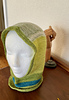
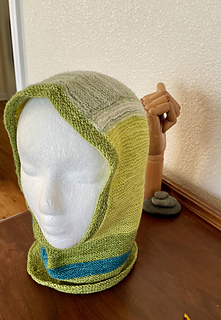
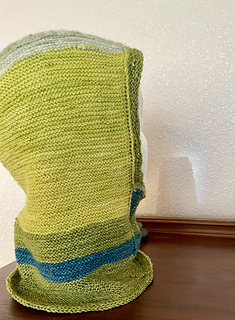
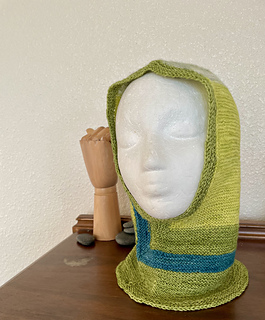
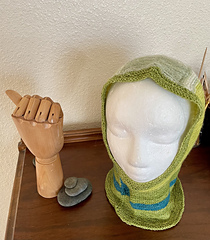
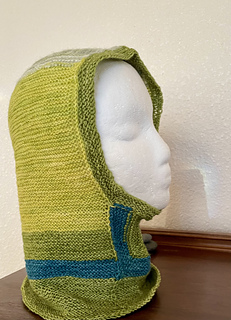
Mitered Square Balaclava

HAT JANURY ‘26: MiTERED SQUARE BALACLAVA
Through end of day on January 11th, 2026, get 20% off the Mitered Square Balaclava pattern! No coupon code required; this discount is taken automatically at checkout. Thanks for checking out this design page, and enjoy!
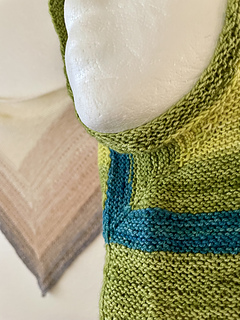
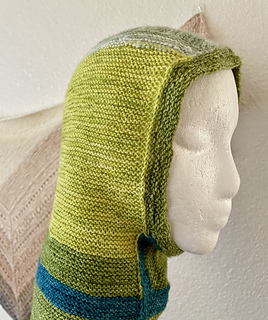
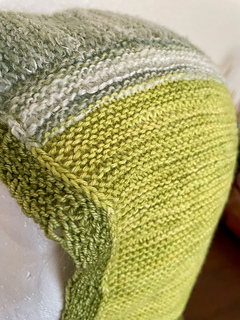
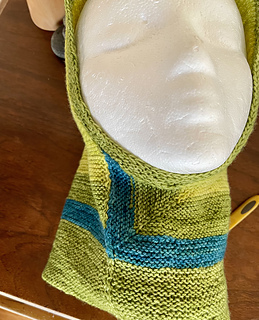
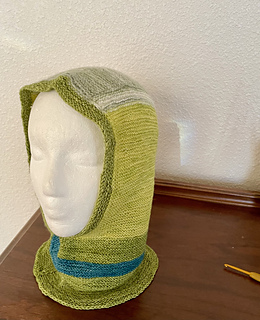
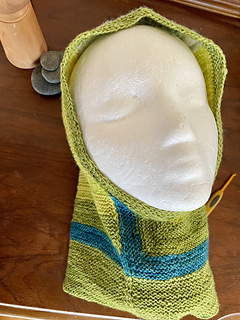
This is an easy project with interesting shaping! It’s knit in light yarn at a warm, dense gauge, has nice finishing details including a border knit around the face opening and exposed seams and faux-seams, and looks great in scrap yarns—scraps or striping yarns will show off the unique construction better than a solid color.
Materials:
- 294-350 yards of soft fingering-weight wool (sample shown in Malabrigo Yarn Sock in Lettuce and Solis and Juliespins Euro Fingering in Packham Pear)
- 1 16”+ circular needle in US3/3.25mm, or size needed for gauge
- Tapestry needle for weaving in ends
- scrap yarn for provisional cast-on crochet hook for provisional cast-on, 2.25mm or size suited to yarn
Gauge:
Gauge is 29 sts and 60 rows over 4”/10cm, in blocked garter stitch, worked flat.. Please be sure to check your gauge.
Measurements:
This .PDF includes instructions for a large balaclava that should fit most adults. It’ll be a little loose and more hoodie-like on smaller sizes—including the wig form I use to model the samples.
It measures 13.5”/34cm tall from crown to neckline, 9”/23cm across the widest part, and 7.5”/19cm deep beyond the face opening. The cowl/neck length as shown is 6.25”/16cm.
All measurements are flat.
Note:
For the main green sample, I used a provisional crochet cast-on—but if you want the exposed-seam look to be a little more consistent, you could substitute a crochet cast-on with your working yarn and simply pick up stitches there.


 Ravelry download


 Cancel
143482 projects
stashed 108842 times
 stashed
218 projects
stashed 372 times