

 The Knit Purl Girl (website)
 Pattern

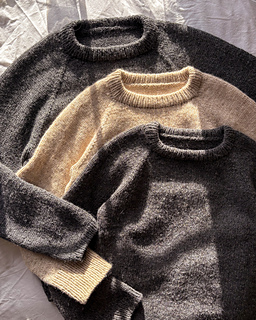
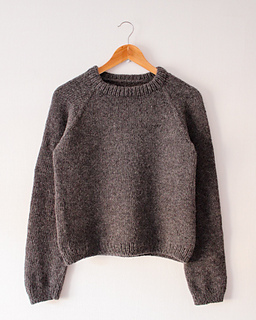
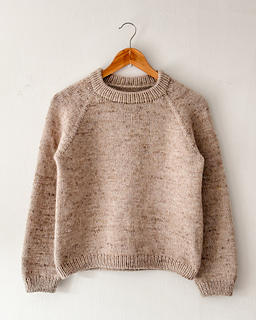
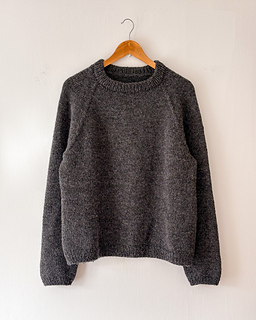
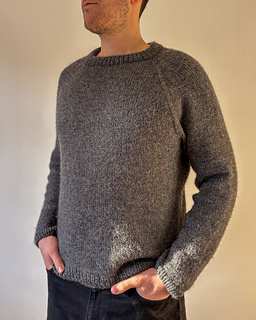
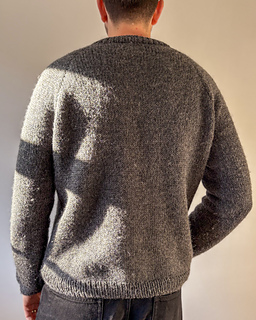
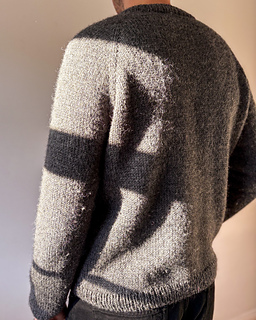
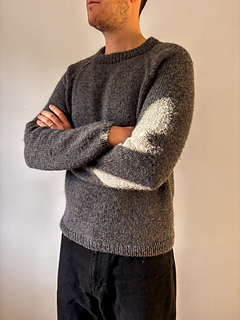
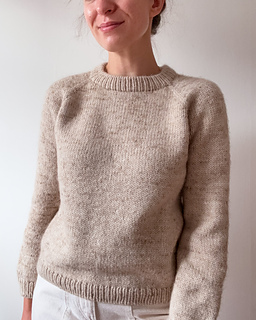
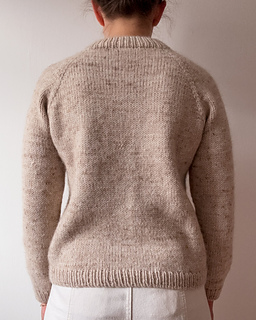
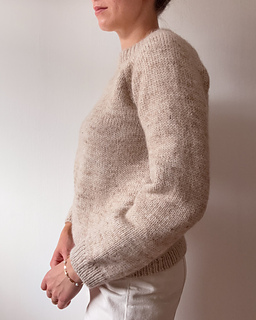
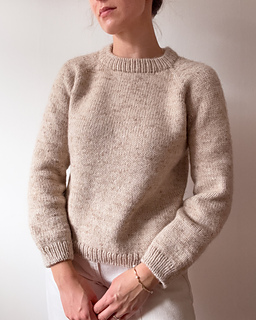
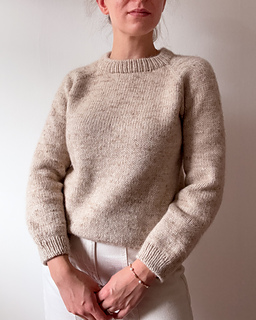
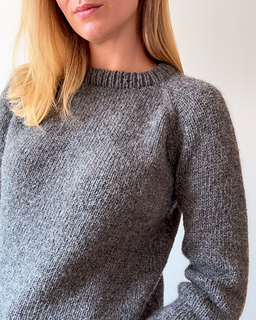
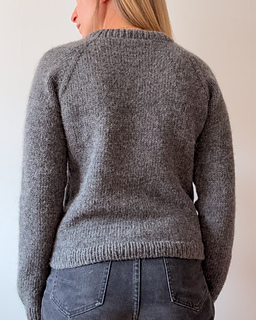
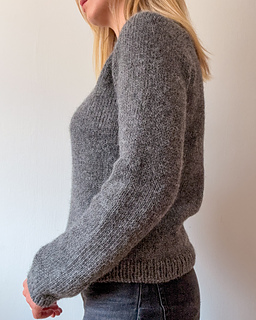
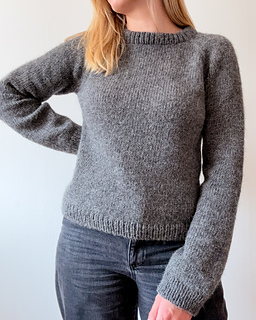
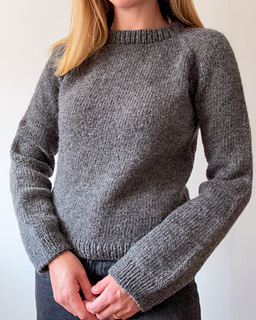
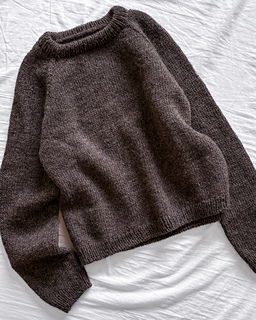
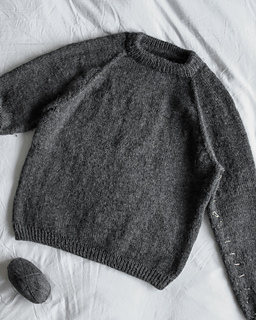
Hayes Sweater


The Hayes Sweater is a simple, top-down raglan sweater, ideal for easy mindless knitting. You will begin by working the yoke, which is shaped with leaning increases at various rates to ensure a good fit across the size range. You will then leave the sleeve stitches to rest whilst you work the length of the body before applying the folded rib collar. Finally, you will work each sleeve which is shaped with a gentle taper. The pattern has been graded to fit both masculine and feminine body types.
This listing includes the feminine and masculine grading for this design across 2 pdfs.
The following information is the same for both versions of the pattern:
Materials and Fit
Notions: You will need 5 mm / US 8 circular needles with 40-, 60-, and 80-cm / 16-, 24-, and 32-in cords; 4 mm / US 6 circular needles with 30- and 60- or 80-cm / 16- and 24- or 32-in cords. If you’re making one of the larger sizes, you may also find it helpful to have both needles with a 100-cm / 40-in cord.
You will also need at least 8 ring stitch markers, your preferred stitch holder (i.e., scrap yarn, a set of spare needles, or a cord), a darning needle, and you may find some clip-on markers helpful to track your work.
Tension: 17 stitches x 24 rounds in Stockinette stitch on 5 mm US 8 needles = 10 x 10 cm / 4 x 4 in.
Techniques include German short rows, leaning increases and decreases, working a tubular cast-off, picking up stitches along a cast-on edge, and sewing or knitting down a folded collar.
The following information is applicable for the masculine version of this pattern:
Sizing and ease: The Hayes Sweater masculine has a recommended positive ease of 5–10 cm / 2–4 in for Sizes A-H and 0-10 cm / 0-4 in for Sizes I-L around the chest (or the widest part of your torso). However, if you wanted less ease, you would be welcome to choose a smaller size relative to your chest measurement and vice versa.
Size: A (B) C (D), E (F) G (H), I (J) K (L)
Chest measurement (cm): 80-85 (85-90) 90-95 (95-100), 100-105 (105-110) 110-115 (115-125), 125-135 (135-145) 145-155 (155-165)
Chest measurement (in): 31.5-33.5 (33.5-35.5) 35.5-37.5 (37.5-39.25), 39.25-41.25 (41.25-43.25) 43.25-45.25 (45.25-49.25), 49.25-53.25 (53.25-57) 57-61 (61-65)
Actual circumference of garment at chest (cm): 90.5 (95.5) 100 (105), 110.5 (115.5) 120 (125), 135 (145) 155 (165)
Actual circumference of garment at chest (in): 35.5 (37.5) 39.5 (41.25), 43.5 (45.5) 47.25 (49), 53.25 (57) 61.25 (65)
Yoke depth (cm): 24.5 (24.5) 26 (26), 26 (26) 27 (27.5), 27.5 (28.5) 29.5 (30)
Yoke depth (in): 9.75 (9.75) 10.25 (10.25), 10.25 (10.25) 10.5 (10.75), 10.75 (11.25) 11.5 (11.75)
Body length from cast-on edge to hem at centre back (cm): 61.5 (61.5) 63 (63), 63 (63) 64 (64.5), 64.5 (65.5) 66.5 (67)
Body length from cast-on edge to start of hem at centre back (in): 24.25 (24.25) 24.75 (24.75), 24.75 (24.75) 25.25 (25.5), 25.5 (25.75) 26 (26.5)
Sleeve circumference at bicep (cm): 34 (35) 36.5 (39), 40 (42.5) 42.5 (44.5), 47 (49) 53 (56.5)
Sleeve circumference at bicep (in): 13.5 (14) 14.5 (15.25), 15.75 (16.75) 16.75 (17.5), 18.5 (19.5) 21 (22.25)
Sleeve length (cm): 52.5
Sleeve length (in): 20.75
Yarn: For my sample I used Sandnes Peer Gynt (100% Norwegian wool; 50 g = 91 m / 100 yds) and Isager Alpaca 1 (100% alpaca; 50 g = 400 m / 437.5 yds).
If you want to use the same yarns, you will need 11 (11) 12 (12), 13 (13) 14 (14-15), 15-16 (16-17) 17-18 (18-19) skeins of Sandnes Peer Gynt and 3 (3) 3 (3), 3 (3) 3 (3-4), 4 (4) 4 (4) hanks of Isager Alpaca 1.
If you want to use a different yarn, I estimate that you will need approximately 950 (1000) 1050 (1090), 1140 (1170) 1220 (1290), 1370 (1460) 1560 (1650) m / 1040 (1100) 1150 (1200), 1250 (1280) 1340 (1420), 1500 (1600) 1710 (1810) yds of each yarn quality chosen. You will need a heavy DK and a lace-weight yarn, or an aran-weight yarn if you’d prefer to work with a single strand.
The following information is applicable for the feminine version of this pattern:
Sizing and ease: The Hayes Sweater feminine has a recommended positive ease of 7–12 cm / 2.75–4.75 in for Sizes A-H and 6-17 cm / 2.25-6.75 in for Sizes I-L around the chest (or the widest part of your torso). However, if you wanted less ease, you would be welcome to choose a smaller size relative to your chest measurement and vice versa.
Size: A (B) C (D), E (F) G (H), I (J) K (L)
Chest measurement (cm): 75-80 (80-85) 85-90 (90-95), 95-100 (100-105) 105-110 (110-115), 115-125 (125-135) 135-145 (145-155)
Chest measurement (in): 29.5-31.5 (31.5-33.5) 33.5-35.5 (35.5-37.5), 37.5-39.25 (39.25-41.25) 41.25-43.25 (43.25-45.25), 45.25-49.25 (49.25-53.25) 53.25-57 (57-61)
Actual circumference of garment at chest (cm): 87 (92) 96.5 (102.5), 107 (112) 116.5 (121), 132 (141) 152 (161)
Actual circumference of garment at chest (in): 34.25 (36.25) 38 (40.25), 42.25 (44) 45.75 (47.75), 52 (55.5) 59.75 (63.5)
Yoke depth (cm): 17.5 (19) 20 (21.5), 21.5 (22.5) 23.5 (25), 25 (26.5) 26.5 (28.5)
Yoke depth (in): 7 (7.75) 8 (8.5), 8.5 (8.75) 9.25 (9.75), 9.75 (10.5) 10.5 (11.25)
Body length from cast-on edge to hem at centre back (cm): 51 (51.5) 52 (53), 55 (56.5) 57 (59), 60 (61) 62 (64)
Body length from cast-on edge to hem at centre back (in): 20 (20.25) 20.5 (20.75), 21.5 (22.25) 22.5 (23.25), 23.5 (24) 24.5 (25.25)
Sleeve circumference at bicep (cm): 32 (33) 34 (35.5), 36.5 (37.5) 39 (40), 43.5 (48) 52 (54)
Sleeve circumference at bicep (in): 12.5 (13) 13.5 (14), 14.25 (14.75) 15.25 (15.75), 17.25 (19) 20.5 (21.25)
Sleeve length (cm): 49
Sleeve length (in): 19.25
Yarn: For my first sample (dark grey), I used a slightly strange combination of 2 x strands of Isager Spinni (100% wool; 50 g = 300 m / 328 yds]), 1 strand of Isager Tvinni (100% wool; 50 g = 255 m / 279 yds), and 1 strand of Isager Alpaca 1 (100% alpaca; 50 g = 400 m / 437.5 yds), all in the shade 4S. Whilst the resulting fabric is quite lovely, I don’t necessarily recommend this combination as it works out to be relatively expensive. If, however, you want to create an interesting, blended colour, I think you could have a lot of fun mixing and matching a custom shade with this yarn combination.
For my second sample (flecked light beige), I used Filcolana Peruvian Highland Wool (100% wool; 50 g = 100 m / 109 yds) in the shade Marzipan 977 held with The Camel’s Yarn Suri Silk Lace (65% Baby Suri Alpaca, 35% Mulberry Silk; 50 g = 400 m / 437 yds).
I would recommend using a yarn combination closer to my second sample where possible (i.e., a heavy DK-weight yarn like Filcolana Peruvian Highland Wool or Sandnes Garn Peer Gynt (100% Norwegian wool; 50 g = 91 m / 100 yds).
If you want to use the same yarn as for my second sample, you will need 8 (9) 9 (10), 10 (11) 11 (12), 13 (14) 15 (16) balls of Filcolana Peruvian Highland Wool and 2 (3) 3 (3), 3 (3) 3 (3), 4 (4) 4 (4) hanks of The Camel’s Yarn Suri Silk Lace.
If you want to use a different yarn, I estimate that you will need approximately 800 (840) 880 (910), 980 (1040) 1080 (1150), 1240 (1320) 1420 (1530) m / 880 (920) 970 (1000), 1080 (1140) 1190 (1260), 1360 (1450) 1560 (1600) yds of each yarn quality chosen.


 Ravelry download


 Cancel
23296 projects
stashed 13584 times
 stashed
12644 projects
stashed 7654 times
11125 projects
stashed 5254 times